

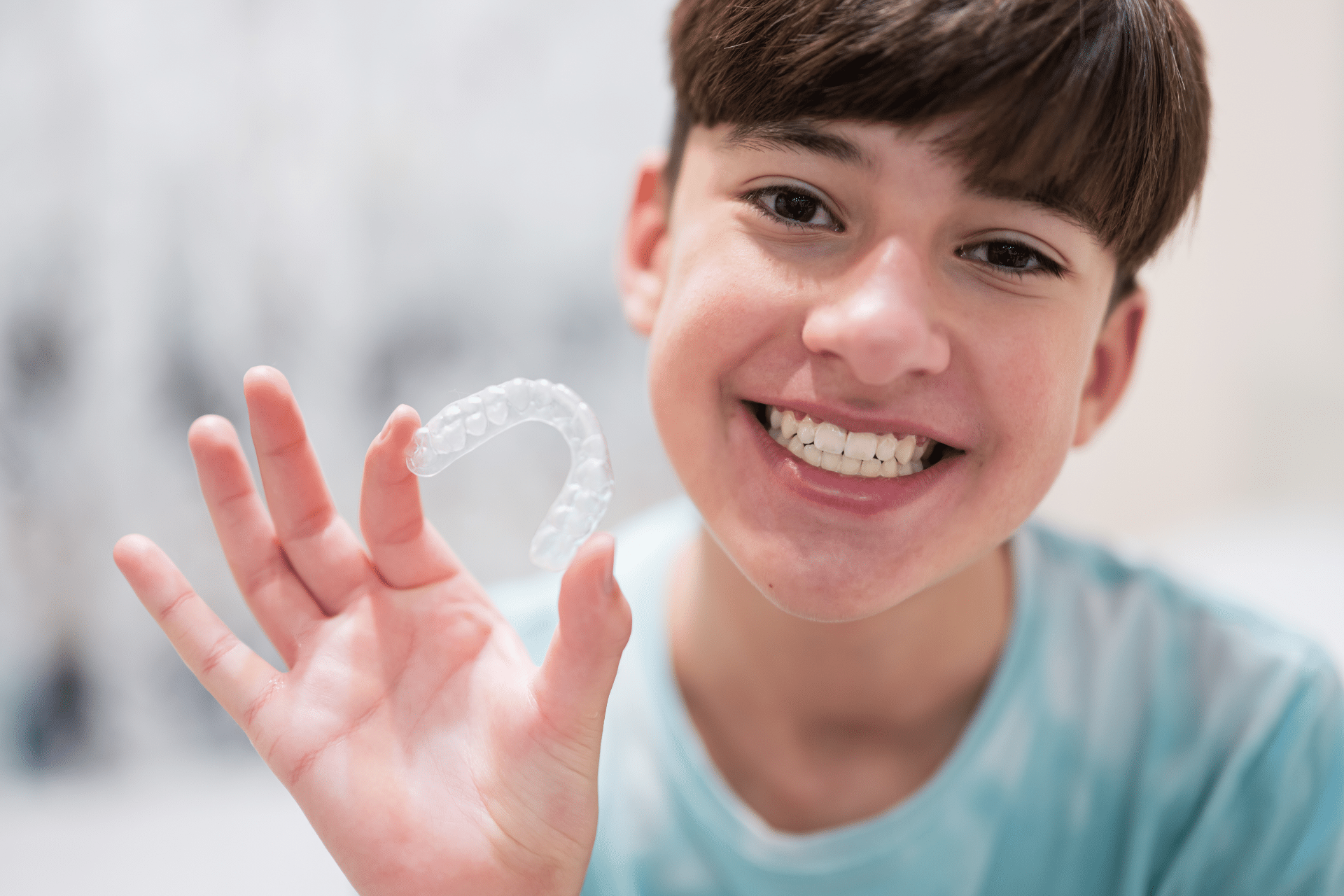
Invisalign can be a strong option for teens who want a less noticeable way to straighten their teeth. However, clear aligner treatment requires consistency. Aligners need to be worn as instructed, removed before meals, stored safely, and cleaned every day.
What Makes Invisalign Appealing for Teens?
Invisalign is appealing for teens because the aligners are clear, removable, and easier to fit into school, meals, sports, and photos. Many teens like that treatment is less noticeable than braces while still helping guide teeth into better alignment.
Because the aligners are removable, teens can eat without worrying about damaging brackets or wires. Brushing and flossing can also feel simpler because there are no fixed appliances to clean around.
For students with busy schedules, that flexibility can make treatment feel more manageable. The tradeoff is that removable aligners require steady daily habits from the beginning of treatment to the final set.
What Habits Does a Teen Need for Invisalign?
A teen needs to be consistent, organized, and honest about aligner wear. Invisalign works best when aligners are worn for most of the day and only removed for eating, drinking anything other than water, brushing, and flossing.
Parents can look at how their teen handles everyday responsibilities. A teen who keeps track of school supplies, sports gear, or other important items may adapt well to Invisalign. A teen who often loses things, forgets routines, or snacks frequently without brushing may need more support before choosing removable treatment.
The American Association of Orthodontists explains that clear aligner patients should store aligners in a case, keep them clean, and contact the orthodontist if an aligner is lost or damaged. These clear aligner best practices are especially important for teens because school lunches, after-school activities, and travel can make aligner care less predictable.
When Might Braces Be Better Than Invisalign?
Braces may be better when a teen has a more complex bite issue, needs more controlled tooth movement, or is not ready to manage removable aligners. Since braces stay attached to the teeth, they can be a dependable option for teens who may not remember to wear aligners consistently.
Invisalign can treat many orthodontic concerns, including crowding, spacing, and some bite problems. Still, some smiles may respond better to braces or another treatment plan. The right choice depends on the bite, jaw growth, tooth position, and the type of movement needed.
At Waddoups Orthodontics, teen treatment options may include Invisalign clear aligners, traditional metal braces, Damon Ultima braces, and ceramic braces. A consultation can help parents understand which option is more predictable for their teen’s smile.
How Can Parents Know If Invisalign Fits Their Teen’s Lifestyle?
Parents can tell whether Invisalign fits their teen’s lifestyle by looking beyond school routines and thinking about confidence, activities, meals, and social comfort. Some teens value a less noticeable option for photos, school events, sports, or performances, while others may prefer braces because they do not have to manage a removable appliance.
The best choice depends on what will make treatment easier to follow consistently. If your teen wants flexibility and can handle aligner care, Invisalign may be a good fit. If they would rather not think about removing, storing, or tracking aligners throughout the day, braces may be the more practical option.
What Happens at an Invisalign Consultation for a Teen?
An Invisalign consultation for a teen includes an exam, a bite evaluation, a discussion of goals, and a review of treatment options. The orthodontic team uses personalized treatment planning to explain what Invisalign can and cannot do for your teen’s smile.
The visit may include digital images, X rays, or scans so the team can evaluate tooth position and jaw development. Parents can ask about treatment length, expected wear time, aligner care, attachments, check-in visits, and what to do if an aligner is lost.
Ready to Schedule a Teen Invisalign Consultation?
Parents should make the decision by weighing the bite, lifestyle, maturity, and long-term goals. Invisalign may be a good match if your teen’s orthodontic needs can be treated with aligners and your teen is ready to follow the daily instructions.
Braces may be the better choice if the case is more complex or if fixed appliances would make treatment more reliable. Both options can support a healthier, more confident smile when they are planned carefully and monitored by an orthodontist.
For families in Murrieta, CA and surrounding communities, Waddoups Orthodontics can help you compare Invisalign and braces in a practical way. Schedule a teen Invisalign consultation in Murrieta, CA with Dr. Waddoups to get personalized recommendations for your teen’s smile, daily routine, and orthodontic needs.